


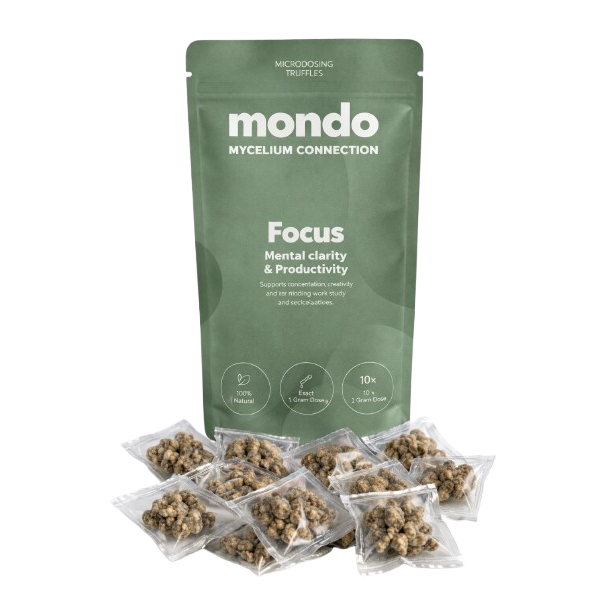


Shipping mycology products EU-wide means dealing with four rulebooks at once: the carrier’s terms, VAT, the drug law of every country the parcel touches, and the shelf life of a living product. Customs is the one thing you can leave out, because goods moving between EU member states are not declared at the border. Each of the other four can stop a shipment on its own.
Which rules apply to a parcel that stays inside the EU?
A parcel from the Netherlands to another EU country crosses no customs border, but it does cross into another country’s drug law. The single market does not harmonise national drug lists, so a product that is lawful to sell in Purmerend can be prohibited the moment it arrives in Copenhagen: the Danish drug list names spores and cultivated fungi of Psilocybe cubensis outright (BEK nr 405 of 26 March 2026, List B no. 411).
Shipments to the United Kingdom and Switzerland are a different case. Both are outside the EU, so customs declarations and import controls apply on top of national drug law.
The table sums up who carries which risk on a typical B2B parcel.
| Risk | What decides it | Who carries it |
|---|---|---|
| Carrier refuses or returns the parcel | The carrier’s prohibited-goods list and your contract | Shipper |
| Wrong VAT treatment | VAT Directive and national VAT law | Supplier and buyer, each for their own part |
| Product prohibited at destination or in transit | National drug law | The seller and the receiver |
| Product spoiled in transit | Temperature, transit time, packaging | Agreed between supplier, carrier and buyer |
What do carriers say about mycology products?
Carriers exclude drugs and anything prohibited by law, and some go further. Read the list that belongs to your own contract; wording differs per carrier and service. Two Dutch examples, checked in October 2026:
- DHL eCommerce Netherlands excludes “Narcotics/drugs and products related or similar to them, including (but not limited to) drugs/substances/products subject to the Opium Act”, as well as “Products whose transport is legally prohibited in the country of origin, transit, or destination” and “Products that can spoil; products that cannot-or should not-be transported unconditioned”. The page adds: “As a shipper, you are supposed to know what products you can and cannot ship.”
- PostNL lists “Drugs and intoxicants” among prohibited items in its shipment conditions, with country-specific additions per destination.
Neither list names grow kits, spores or truffles, and that silence is not a permission. A carrier can treat a product “related or similar to” a controlled substance as excluded, and under the transit clause a parcel routed through a country where the product is prohibited breaches the terms even if origin and destination allow it.
Never hide what is in the parcel
Do not describe mycology products as something else on a label or in a carrier system. If a carrier’s terms exclude your product, use another carrier whose terms allow it, or do not ship. This article is general information as of October 2026, not legal or tax advice.
How does VAT work on a cross-border B2B order?
On a B2B shipment between two EU countries, the supplier normally invoices without VAT and the buyer accounts for VAT in its own country. Article 138 of the VAT Directive exempts the supply when the buyer is a business identified for VAT in another member state and has given that VAT number to the supplier. Article 200 then makes the buyer liable for VAT on the intra-Community acquisition. In everyday language this is called reverse charge.
Three conditions trip up small shops:
If you then sell on to consumers in other EU countries, a different rule kicks in: above a combined EU threshold of €10,000 per year, you charge the VAT rate of the customer’s country, and the One Stop Shop lets you declare it in one return (KVK, updated September 2026).
Who answers for the law at the destination?
The seller who sends goods into a country answers for whether they may be sold there, and the receiver can be exposed too: Denmark’s List B, for example, covers import and receipt as well as sale. A supplier’s location does not move that responsibility. Mondo’s legal notice says it plainly: buyers outside the Netherlands are responsible for checking their local law, and Mondo sells for mycological research, educational, horticultural or souvenir purposes, to adults (18+).
For a wholesale buyer that means your shelf and your own shipments. For a webshop it means every country in your checkout, including countries you never target on purpose. Our overview of grow kits by country shows where kits are prohibited, unclear or not prohibited, and the legal status overview for Europe adds truffles and spores. Under dropshipping the parcel goes straight to your customer, but the sale and the choice of destination countries stay yours.
What changes when the product is perishable?
Perishable products can arrive legal and correctly invoiced, and still be unsellable. Fresh magic truffles are the clearest case, but of the countries in our overview only the Netherlands confirms that selling them is not prohibited (and dried truffles are prohibited there too, per Jellinek), so truffle shipping is in practice a domestic Dutch question. Grow kits are living mycelium too, and react to heat, frost and depot time. For planning:
- Avoid dispatch on days that leave a parcel in a depot over the weekend or a public holiday.
- Check the carrier’s terms for perishables before you rely on a standard parcel service; the DHL clause above excludes goods that “cannot-or should not-be transported unconditioned”.
- Unpack and check on arrival, then store as printed on the pack. The guides on truffle storage in shops and grow kit stock rotation cover what happens after delivery.
From the producer side
Agree on a delivery-day pattern with your supplier before the first order, not after the first warm parcel. Shipping and delivery terms for partners are set per partner, so ask for them when you apply rather than assuming a standard.
A pre-shipment checklist
Run this once per destination country, and again when anything changes.
- ☐ The product is not prohibited in the destination country, according to a primary or official source with a date.
- ☐ The likely route avoids countries where the product is prohibited, or your carrier confirms it does.
- ☐ Your carrier’s prohibited-goods list allows the product, in writing.
- ☐ Your VAT number is valid in VIES and activated for intra-EU purchases.
- ☐ You know who arranges transport, and which proof-of-transport documents you will keep.
- ☐ Perishable items have a dispatch day that avoids weekend gaps.
- ☐ Destination countries that fail any line are blocked in your webshop checkout.
Shop at Mondo Wholesale
Mondo Wholesale is the B2B side of Mondo Europe B.V.: grow kits, grow bags, magic truffles, spores, liquid cultures and grow tools, produced in Purmerend and shipped to business partners across Europe.
Questions about shipping mycology products across the EU
Do I need a customs declaration to receive grow kits from the Netherlands in another EU country?
No. Goods moving between EU member states are not declared at customs. That says nothing about whether the product is legal at the destination; national drug law still applies in full.
Can I ship mycology products to the UK or Switzerland from the EU?
Both are outside the EU, so customs and import controls apply. Both also control fungi containing psilocybin, and the status of grow kits there is unclear or high risk according to our legal overview. Get local legal advice before considering either market.
Why would my supplier charge Dutch VAT on a cross-border order?
Usually because your VAT number could not be validated, is not activated for intra-EU trade, or was not given before invoicing. Without a valid number the supply cannot be exempt, so the supplier must charge the VAT of its own country.
Is the carrier responsible if a parcel is seized at the destination?
Not usually. Carrier terms put the responsibility for what is in the parcel on the shipper, and the legal question at the destination sits with the seller and the receiver.
Sources and further reading
- DHL eCommerce Netherlands: Prohibited goods
- PostNL: Shipment conditions
- Council Directive 2006/112/EC, Article 138 (intra-Community supply exemption)
- Council Directive 2006/112/EC, Article 200 (VAT payable by the acquirer)
- Implementing Regulation (EU) 282/2011, Article 45a (proof of transport)
- KVK: VAT rules for e-commerce in the EU (updated 24 September 2026)
- Jellinek: Truffels & paddo’s en de wet (Dutch)
- Bekendtgørelse om euforiserende stoffer, BEK nr 405 af 26/03/2026, Bilag 1 (Denmark)
- Bekendtgørelse om euforiserende stoffer, BEK nr 557 af 31/05/2011, § 2 (Denmark, List B prohibitions)
Facts checked on 7 October 2026 against the sources above. EU legal texts were read in the consolidated copies on legislation.gov.uk.
