


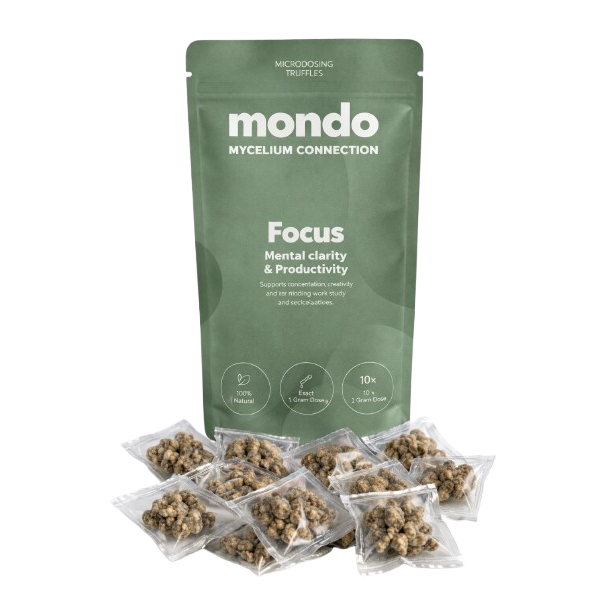


Grow kits are legal in the EU only where national law allows them, because drug law is set per member state: in October 2026 the 12 EU countries we checked range from “not prohibited” (the Netherlands) to “named on the drug list” (Denmark), with most countries in between because no official source addresses kits at all. For a seller that middle group is the hard part, because “unclear” is not the same as “allowed”.
Is there one EU rule for magic mushroom grow kits?
No. Psilocybin and psilocin are controlled under Schedule I of the 1971 UN Convention, as the EU drugs agency EUDA notes, but each member state writes its own list and decides how fungi, spores and mycelium fit into it. The result is a patchwork: some laws name the mushrooms or fungi, some only the substances, and some turn on whether cultivation for drug use is intended.
The single market lets goods move between member states without customs checks. It does not override a national drug law. A grow kit that is lawful to sell in Purmerend can be a prohibited item the moment it is delivered in Copenhagen.
Where do grow kits stand in each EU country?
The table covers the EU countries in Mondo’s legal status overview for Europe. “Unclear” means we found no law text, ruling or national drug information service that settles the point.
| Country | Grow kits / grow bags | What the sources say |
|---|---|---|
| Netherlands | Not prohibited | Jellinek: grow kits are not prohibited; the mushrooms that grow from them are (DRUGSinfo) |
| Denmark | Prohibited | List B no. 411 names mushrooms and spores of Psilocybe cubensis, “cultivated” ones included |
| Germany | High risk, contested | BtMG Anlage I covers material “suitable for reproducing or obtaining” the organisms when abuse for intoxication is intended |
| Austria | Unclear | § 27 SMG punishes supplying psilocybin fungi and growing them for drug misuse; kits are not named |
| Czech Republic | Unclear | Since 1 January 2026 the Criminal Code covers growing and processing fungi that contain controlled substances |
| Italy | Unclear | A 2016 University of Milan study found “no specific indication in the law” on grow kits; it analysed kits seized by police |
| Spain | Unclear | Energy Control: cultivation is, as a rule, treated as a crime because it can promote drug use |
| Portugal | Unclear | Cultivation of scheduled plants stays a crime even for personal use (Law 55/2023, per PLMJ) |
| Ireland | Unclear, high risk | Controls “a fungus of any kind or description” containing psilocin |
| Belgium | Unclear | Truffles and mushrooms are prohibited; the drug information service does not address kits |
| France | Unclear | Hallucinogenic mushrooms are narcotics; no official source on kits |
| Poland | Unclear | “Hallucinogenic mushrooms” are defined as fungi containing psychotropic substances; kits not addressed |
Checked 7 October 2026. Outside the EU, the United Kingdom and Switzerland are covered on the overview page.
Why do the laws treat kits so differently?
The difference comes from the words each law uses. Three patterns cover most of Europe:
- The law names mushrooms. The Dutch Opium Act lists “mushrooms that naturally contain psilocin or psilocybin”. A kit is mycelium and substrate, not a mushroom, so it falls outside, until it fruits.
- The law names fungi, organisms or spores. Denmark names spores and cultivated fungi of P. cubensis. Ireland controls “a fungus of any kind”. A colonised kit is living fungus of a psilocybin species, which pulls it toward the controlled side.
- The law looks at intent. Germany adds reproductive material “if abuse for intoxication is intended”, quoted by the Federal Constitutional Court in 2009. Spain’s drug information service applies the same logic to cultivation.
Where a law looks at intent, the seller’s own marketing becomes evidence. A product page that explains how to harvest psychoactive mushrooms makes the purpose hard to argue away.
Do not sell where kits are prohibited
In Denmark grow kits and P. cubensis spores are on the drug list. Do not stock, list or ship them there. For countries marked unclear or high risk, do not start selling on the basis of this table; get written advice from a lawyer in that country first. This article is general information as of October 2026, not legal advice.
How do you check a new market before you list grow kits?
Check the law of every country you deliver to, not just the country where your company sits. A practical routine:
What does this mean for wholesale and dropshipping orders?
The legal check sits with you as the seller, whatever the supply model. Mondo’s legal notice states that buyers outside the Netherlands are responsible for checking their local law, and Mondo sells for mycological research, educational, horticultural or souvenir purposes, 18+.
With wholesale you hold the stock, so the check is about your shelf and your own deliveries. With dropshipping grow kits Mondo ships to your customer, but the sale is yours, and so is the choice of countries you accept orders from. The range itself, from magic mushroom grow kits to all-in-one grow bags, carries the same legal status per country.
From the producer side
Keep one sheet per country you sell to: the source you checked, the date, and the lawyer’s opinion if you have one. When a payment provider, a marketplace or an authority asks why you sell kits there, that sheet is your answer.
Shop at Mondo Wholesale
Mondo Wholesale is the B2B side of Mondo Europe B.V.: grow kits, grow bags, magic truffles, spores, liquid cultures and grow tools, produced in Purmerend and shipped to business partners across Europe.
Questions about selling grow kits in the EU
Are grow kits legal in the Netherlands?
Yes, grow kits are not prohibited in the Netherlands, according to Jellinek and DRUGSinfo. The mushrooms that grow from them fall under the Opium Act, so a kit that has fruited is a different matter.
If a country’s law does not mention grow kits, can I sell them there?
Not on that basis alone. Silence in the law often means the question is decided by the general wording (“fungi”, “organisms”) or by intent, and courts can read that against you. Get local advice first.
Do the rules differ for grow bags and grow kits?
No source we found distinguishes them. Both contain colonised mycelium of Psilocybe cubensis, so expect them to be treated the same way.
Is it legal to ship grow kits from the Netherlands to another EU country?
Dutch law covers the sale in the Netherlands; the law of the destination decides whether the kit may be sold and received there. Free movement of goods does not override national drug law.
Where can I see the status of truffles and spores as well?
The legal status overview for Europe has all four product groups for 14 countries, with the sources for each line.
Sources and further reading
- Jellinek: Truffels & paddo’s en de wet (Dutch)
- DRUGSinfo (Trimbos-instituut): Zijn paddo’s verboden?
- Bundesverfassungsgericht, 2 BvR 338/09 (2009), BtMG Anlage I wording
- Bekendtgørelse om euforiserende stoffer, BEK nr 405 af 26/03/2026, Bilag 1 (Denmark)
- § 27 Suchtmittelgesetz (Austria)
- Energy Control: Leyes y drogas (Spain)
- Gambaro et al. (2016), grow-kits seized by police, J Pharm Biomed Anal (University of Milan)
- Advokátní deník: drug offences after Act 270/2025 Sb. (Czech Republic)
- PLMJ: Change to the Anti-Drugs Law (Portugal, Law 55/2023)
- S.I. No. 55/2006 (Ireland)
- EUDA drug profile: hallucinogenic mushrooms
Facts checked on 7 October 2026 against the sources above.
