


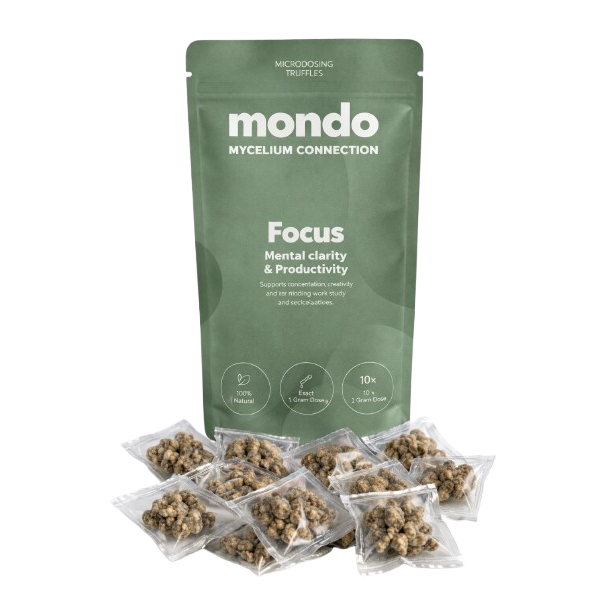


Grow kits for retailers work best as a small, deliberate range: a few strains on the shelf, the tools that go with them, and a clear legal framing on every pack and product page. In the Netherlands, grow kits are not prohibited (Jellinek, checked October 2026), which is why Dutch smartshops sell them openly; in other countries you check the law first. After that, the work is mostly about treating a living product as one: ordering in a rhythm, storing it right and rotating it.
Step one: can you sell grow kits where your shop is?
You can only add grow kits if the law of your country allows selling them, and that answer differs across Europe. In the Netherlands, Mondo’s legal notice states that grow kits, spores and mycelium are not controlled substances, while magic mushrooms are prohibited, dried ones for decades and fresh ones since 1 December 2008. Jellinek confirms that grow kits are not prohibited under current Dutch law.
Elsewhere, the position ranges from similar to the Dutch one to a clear ban. Start with the legal status overview for Europe and the country notes in selling grow kits in the EU, then check your national law text.
Where grow kits are prohibited, they stay out of your range
If grow kits are prohibited in your country, do not stock them, and do not sell them online to countries where they are prohibited. Products from Mondo are sold for mycological research, educational, horticultural or souvenir purposes, to customers aged 18 or over, and buyers outside the Netherlands are responsible for checking their local law. This is general information, not legal advice.
How do you build a starter range?
A starter range has three layers: grow kits as the core, add-ons that help the customer succeed, and a few products for customers who want to go further. Think of it as answering three kinds of customer at your counter.
| Range layer | What goes in it | Which customer it serves |
|---|---|---|
| Core | A handful of fully colonised Psilocybe cubensis grow kits | The first-time buyer who wants a complete kit |
| Add-ons | Grow tools that help the customer keep the kit in the right conditions | The buyer who wants better conditions for the kit |
| Next step | All-in-one grow bags, spores for microscopy, liquid cultures | The returning customer or hobby mycologist |
The core layer is where you start. Mondo’s site lists strains such as Golden Teacher, McKennaii, Amazonian, B+, PES Hawaii, Cambodian and Mexicana, and a longer list beyond that. You do not need all of them. A short list that your staff can explain beats a wall of boxes nobody can tell apart.
How many strains should you start with?
Start with fewer strains than you think, because every extra strain splits your stock and slows rotation. The right number depends on your footfall and how fast kits move, which you only know after a few months of sales.
A practical approach:
If you also run a webshop, dropshipping grow kits lets you list more strains online than you keep in the shop.
How do you keep living stock sellable?
A grow kit is a living culture, so treat stock like fresh goods, not like hardware. Its condition depends on temperature, light and time, and the producer’s storage instructions on the box are what you follow. Ask your supplier how long kits keep under those conditions and plan your order size around that answer.
In the shop, that comes down to a few habits:
- First in, first out. New deliveries go behind existing stock.
- No display in the window. Sunlight and heat from lamps or heaters work against a living product. Show an empty display box or a photo, and keep the real kits in the storage conditions on the pack.
- Check on delivery. Look for damage and visible contamination, note batch codes and photograph anything wrong for a claim.
- Write down what you lose. Your own loss record sets the next order size better than any estimate.
From the producer side
Ask for kits to arrive early in the week. A kit that sits in a parcel depot over a weekend has had a harder start than one that goes into your storage on a Tuesday, and you have the rest of the week to sell it.
What should your staff be able to answer?
Staff should be able to explain what a grow kit is, what the legal framing is and which strain differs from the next, without giving use or dosing advice. Grow kits are sold for mycological or educational purposes, 18+. Questions about consuming what grows from a kit are not for the counter; refer customers to an independent information service such as Jellinek or your national equivalent.
Prepare a one-page sheet per strain with what the producer tells you about it: appearance, growing conditions, how the kit is set up. Your supplier’s product texts are the source. Check with them before you add anything of your own, so you do not make claims that the product cannot back up.
How do you place your first order?
You place a first order with Mondo through the B2B portal after your partner account is approved. Apply through the “Become a partner” page or the contact form option “B2B Account Request”, with your company registration, VAT number and a short description of your shop. Prices, minimums and lead times become visible in the portal after approval; they are agreed per partner.
Plan the first order small: your core strains, a set of add-ons and nothing from the third layer yet. See the grow kit range for the strains Mondo supplies to business partners.
Shop at Mondo Wholesale
Mondo Wholesale is the B2B side of Mondo Europe B.V.: grow kits, grow bags, magic truffles, spores, liquid cultures and grow tools, produced in Purmerend and shipped to business partners across Europe.
Questions about adding grow kits to a shop
Do grow kits sell better in a physical shop or online?
It depends on your customers. A physical shop has the advantage of advice at the counter; a webshop can list more strains through dropshipping. Combining a small shelf range with a longer online list gives you both.
Can I display grow kits on an open shelf?
Keep the actual kits in the storage conditions on the box and use display boxes or photos on the shelf. A living product on a warm, bright shelf loses condition faster than one in proper storage.
Should I sell spores and liquid cultures from the start?
Only if you have customers asking for them and staff who can explain that spores are sold for microscopy. For most shops these belong in the second phase, once grow kits are selling.
What do I do with a contaminated kit a customer brings back?
Photograph it with the batch code visible, note the purchase date and claim it from your supplier under the agreed procedure. Agree that procedure before your first order, so you know what proof is needed.
Can I sell grow kits next to truffles in the same shop?
In the Netherlands, both are legal to sell, provided the truffles are fresh. Outside the Netherlands, check each product separately; one being legal says nothing about the other.
Sources and further reading
Facts checked in October 2026 against the source above and Mondo’s published B2B information.
