




Choosing a mycology supplier comes down to ten questions about who actually produces the goods, how they handle the legal side, and what happens when a batch goes wrong. A supplier that answers them in writing, before your first order, is usually one you can build a range on. A supplier that answers with a price list and nothing else is telling you something too.
Why does the choice of supplier matter more in mycology than in other categories?
Grow kits and fresh truffles are living products, so the supplier’s production and handling decide what lands on your shelf. A pack of rolling papers is the same product in month one and month six. A colonised grow kit or a pack of fresh truffles is not. Contamination, warm transport or a long stay in a warehouse all show up later, at your counter, as a customer complaint.
The second reason is legal. Your supplier’s paperwork and product descriptions become part of your own compliance. If they describe spores as something other than microscopy material, or ship truffles to a country where they are prohibited, that is your problem as well as theirs.
The 10 questions, grouped by what they test
The questions fall into four groups: production, legal, ordering and after-sales. Ask all ten, in writing, and keep the answers with your supplier file.
Production
Legal and compliance
Ordering and logistics
After-sales
How do you compare the answers?
Score each supplier on the same table, so a confident sales call does not outweigh a vague written answer. The middle column is what a good answer usually contains; the right column is the answer that should make you hesitate.
| Question | A good answer contains | A warning sign |
|---|---|---|
| In-house production | Location, process steps, who does what | “We work with partners” and no detail |
| Batch consistency | Checks before dispatch, what happens to rejects | “All our products are top quality” |
| Own vs sourced | A clear split per product | No answer, or “everything is ours” for a huge range |
| Countries per product | A list per product, including refusals | “We ship everywhere” |
| Product texts | Ready-made texts with legal framing and age limit | Texts that promise effects or give use instructions |
| Company details | Legal entity, registration number, VAT number | Only a trading name and a webshop |
| Ordering | Approval steps, portal, when prices appear | Prices on request with no process behind it |
| Perishable shipping | Shipping days, packaging, weather policy | “Standard parcel service” |
| Claims | Written procedure with proof and period | “Just contact us” |
| Contact | Named person or monitored inbox | Contact form only |
What should you check yourself instead of asking?
Some answers you can verify without trusting the supplier. Look up the legal entity in the business register and check that the address and registration number match the website. Check the VAT number in the EU’s VIES service. Search for the company name together with “customs” or “seized” to see whether shipments have run into trouble in your country.
Then check the legal position of each product in your own country. Do not rely on the supplier for this. Even in the Netherlands the line is sharp: according to the Dutch addiction care institute Jellinek (checked October 2026), grow kits and fresh truffles are not prohibited, while fresh and dried magic mushrooms and dried truffles are. Other countries draw the line elsewhere. Our overview of the legal status of mycology products in Europe is a starting point, not a substitute for your own check.
What does a sample order tell you that a sales call does not?
A first small order shows you the supplier’s packaging, labelling and shipping in practice. Look at how kits are sealed, whether labels carry a batch code and a date, how the parcel was packed and how long it was on the road. Photograph everything on arrival. If something is wrong, use that first order to test the claims procedure from question 9 while the stakes are low.
From the producer side
Ask to see the claims procedure before you need it. A claim about a contaminated kit is easy to settle when both sides agreed beforehand which photos are needed, within how many days, and whether the batch code must be visible. Without that, the same claim turns into a long email thread.
How does Mondo answer these questions?
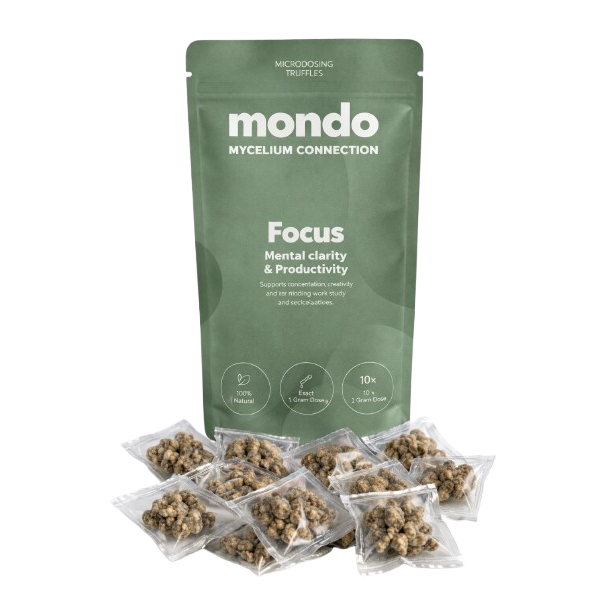
Mondo Europe B.V. has produced in-house in Purmerend, the Netherlands, since 2009, and supplies grow kits, grow bags, spores for microscopy, liquid cultures and grow tools to business partners across Europe, and fresh truffles where they may be sold. Registered partners order through a B2B portal where prices and terms become visible after approval; minimums and lead times are agreed per partner. You can read how production is set up on the quality and production page, check the wholesale terms and FAQ, and when you are ready, apply to become a partner.
This is general information, not legal advice. Check the law in every country where you sell.
Shop at Mondo Wholesale
Mondo Wholesale is the B2B side of Mondo Europe B.V.: grow kits, grow bags, magic truffles, spores, liquid cultures and grow tools, produced in Purmerend and shipped to business partners across Europe.
Questions about choosing a mycology supplier
Should I use one mycology supplier or several?
One main supplier keeps ordering and claims simple, and makes it easier to build a consistent range. Some shops add a second supplier for a specific product the first does not make. Avoid splitting the same product across two suppliers unless you can tell the batches apart.
Is a cheaper supplier a false economy for grow kits?
Not automatically. What costs money is contamination, refunds and unhappy customers, so compare suppliers on claims handling and consistency as well as price. A low price with a vague claims procedure often ends up more expensive.
Do I need a contract with my supplier?
For regular wholesale, the supplier’s B2B terms usually govern the relationship. For exclusive or regional deals, white label or private label, a written agreement on volumes, branding and territory is sensible. Have it read by someone who knows commercial contracts in your country.
How long should supplier approval take?
It depends on the supplier and on how complete your application is. Send your company registration, VAT number and a short description of your shop or webshop with the first message. That removes the most common delays.
Can a supplier refuse to ship to my country?
Yes, and a careful one will for products that are prohibited there. Treat a refusal as a sign that the supplier checks the law, not as an obstacle to work around.
Sources and further reading
Facts checked in October 2026 against the source above.
