


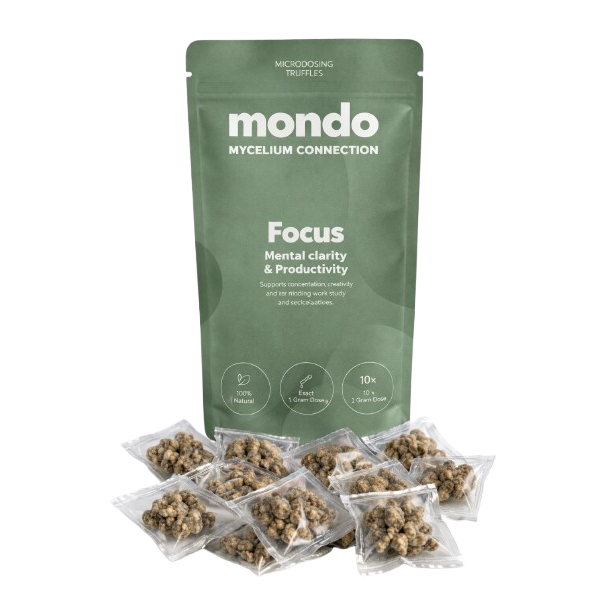


White label vs private label is a choice between selling a proven product under your brand and having a product made to your own specification. With white label, the producer’s existing product gets your name and design, so you can start quickly. With private label, you shape the product itself, which takes longer and more decisions, but gives you something competitors cannot order from the same catalogue.
What is the difference in one sentence each?
White label means an existing product with your branding; private label means a product developed or adapted for you and sold only under your brand. In mycology terms: a white label grow kit is the producer’s standard kit in your packaging. A private label product might be a different bag size, a specific combination of strain and tools, or a truffle pack composed to your brief.
The words are used loosely in the trade, and some suppliers swap them. Always ask what exactly is included rather than relying on the label.
How do the two models compare?
The table shows where the two models usually differ. Your supplier’s terms decide the details, including minimums and lead times, which are agreed per partner.
| White label | Private label | |
|---|---|---|
| Product | Producer’s existing product | Adapted or developed to your specification |
| Who decides the content | Producer | You, within what the producer can make |
| Your branding | Label, packaging design, inserts | Label, packaging, and often the product name and format |
| Time to market | Shorter: design and approval of artwork | Longer: specification, samples, approval, then artwork |
| Your share of the work | Brand, artwork, marketing | Brand, artwork, marketing, product decisions, sample testing |
| Exclusivity | Others may sell the same product under another name | Product is yours; exclusivity terms are agreed separately |
| Typical fit | Shops and webshops building a brand quickly | Brands with a clear product idea and a sales plan behind it |
When does white label make more sense?
White label makes sense when your strength is your audience, not product development. If you already sell to a loyal customer base, through a webshop, a chain of shops or a community, the fastest way to a branded product is to put your name on something that is already in production.
Choose white label if most of these apply:
- ☐ You want a branded product on the shelf in the shortest possible time
- ☐ You are happy with the producer’s existing product as it is
- ☐ You would rather spend your budget on marketing than on development
- ☐ You want to test whether your brand sells before committing to more
- ☐ You do not need to be the only one selling this product
Mondo’s microdosing range is an example of how white label works in practice: concepts named Balance, Focus and Advanced are offered to wellness brands, coaches and retreat organisations as ready-made products to sell under their own brand. See microdosing solutions for how those concepts are set up, and check the law in every market first: the Dutch position on fresh truffles does not carry over to other countries, and you only sell where these products are legal.
When is private label worth the extra work?
Private label is worth it when the product itself is your selling point. That is the case when you have a gap in mind that the catalogue does not fill, or when competitors already sell the white label version of what you would offer.
Choose private label if most of these apply:
- ☐ You can describe the product you want in concrete terms: format, contents, size, packaging
- ☐ You have the time to review samples and approve them
- ☐ You have a sales plan that justifies the volume a custom product requires
- ☐ Being different from competitors matters more than speed
- ☐ You are prepared to discuss exclusivity terms for your region
If your idea goes beyond adapting an existing product, a custom product project may be the better starting point, and exclusive regional partnerships are a separate agreement on top.
What stays your responsibility in both models?
Your name on the pack makes you the brand owner towards your customers, whichever model you choose. That has three consequences.
First, the legal framing on your packaging and website is yours. Grow kits are sold for mycological or educational purposes, spores for microscopy, all with an age limit of 18. Your marketing has to stay within that framing.
No effect or health claims on your label
Do not put effects, use instructions or health claims on packaging, inserts or product pages, also not on microdosing products. Apart from the legal risk, a supplier may refuse artwork that crosses that line. Check the law for every country where your brand is sold before launch; this is general information, not legal advice.
Second, customers come to you with complaints. Agree with the producer how claims are handled and what proof is needed, just as you would for dropshipping grow kits.
Third, you decide which countries your brand is sold in. A producer making your product in the Netherlands does not make it legal anywhere else.
How do you get from idea to shelf?
The route is the same for both models; private label adds the specification and sample steps.
From the producer side
Send your artwork as a draft before it is final. Packaging for living products has practical limits, such as room for a batch code, a date and storage text, and it is cheaper to adjust a draft than a finished design.
Start with the white label page or the private label page, depending on where your plan sits.
Shop at Mondo Wholesale
Mondo Wholesale is the B2B side of Mondo Europe B.V.: grow kits, grow bags, magic truffles, spores, liquid cultures and grow tools, produced in Purmerend and shipped to business partners across Europe.
Questions about white and private label
Can I start with white label and switch to private label later?
Yes, and it is a common sequence. White label lets you test whether your brand sells; once it does, you have the sales figures to justify a product of your own.
Will other shops sell the same product as my white label product?
They can, under their own brand, unless you agree exclusivity. If that matters to you, discuss an exclusive regional partnership or move to private label.
Who designs the packaging?
Usually you supply the design, and the producer checks it for fit and for the legal framing. Ask your supplier for the templates and technical requirements before your designer starts.
Are minimum quantities higher for private label?
Custom work generally needs a larger run to be worth producing, but there is no standard figure. Minimums are agreed per partner; ask for them when you send your brief.
Can I sell microdosing products under my own brand everywhere in Europe?
No. The Dutch position on fresh truffles is specific to Dutch law and does not apply abroad. Check the law in each market, and only launch where the product is legal.
